What CRI 95 changes in a room full of wood and fabric
28 July 2026 · Fixtures
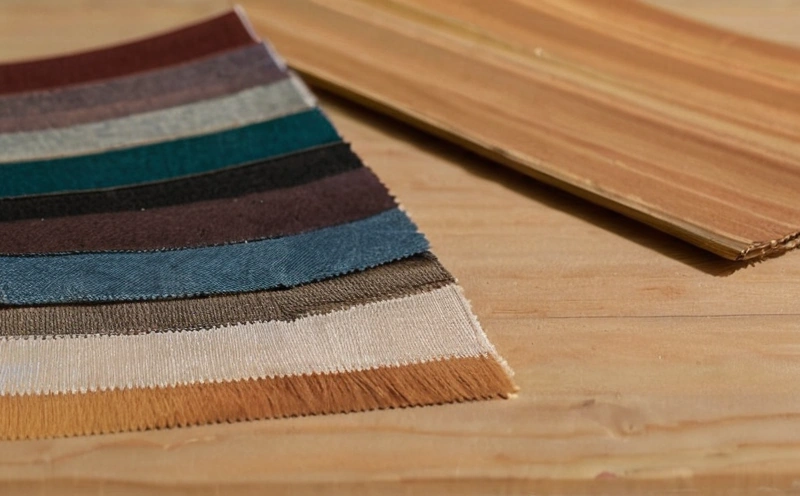
Colour rendering index measures how closely a lamp reproduces eight reference colours against a daylight source of the same colour temperature, on a scale ending at 100. Domestic lighting starts being honest at CRI 90, and a CRI 80 lamp desaturates walnut, terracotta and rust linen enough to read as dust.
Which materials show the gap between CRI 80 and CRI 95 first?
Deep reds and browns break first: walnut, terracotta, rust linen, unglazed clay and mid brown leather all lose saturation under a CRI 80 lamp. Blues, greys and greens hold their appearance, which is why a white and grey apartment tolerates 12 AED retail lamps and a timber room does not.
Skin tone is the second casualty and the one people notice in a mirror. A bathroom mirror lamp at CRI 80 with an R9 value near zero renders a face grey-green, which is the reason occupants describe an expensive bathroom as looking like a hospital without being able to point at the fitting responsible.
How do you test colour rendering on site without a spectrometer?
Place a rust or terracotta fabric sample beside a piece of oak, hold both at 500 mm from the candidate lamp, then carry the same two samples to a north facing window at midday. A lamp that shifts the fabric towards brown and the oak towards grey is rendering below CRI 85.
A second check needs a phone. Photograph the two samples under the candidate lamp with white balance locked, then photograph the samples again at the window. A CRI 95 lamp holds the red channel within a few per cent between the two frames, while a CRI 80 lamp drops the red channel visibly and flattens the wood grain.
Why does R9 decide more than the headline CRI number?
The published CRI figure averages test colours R1 to R8, none of which is a saturated red, so a lamp scoring CRI 90 can still return R9 below 20. R9 measures strong red separately and governs how skin, timber and warm textiles appear. Quality lamps hold R9 above 50, specification lamps above 90.
The newer IES TM-30 method reports two numbers instead of one: fidelity Rf and gamut Rg. A domestic lamp worth installing returns Rf 90 or higher with Rg between 95 and 105, because an Rg above 110 oversaturates reds and makes a timber floor look varnished orange. Ask the supplier for the Rf, Rg and R9 figures in writing before ordering fifty lamps.
What does a CRI 95 upgrade cost per lamp and per room?
A specification grade GU10 at CRI 97 costs 90 to 140 AED against 12 to 18 AED for a standard retail GU10, so a 12 lamp living room moves from about 180 AED to about 1380 AED. The gap is 1200 AED once, spread across a lamp life of 25,000 hours.
| GU10 lamp grade | Rendering | Price per unit | Efficacy | Watts for 400 lm | Beam angles offered |
|---|---|---|---|---|---|
| Standard retail | CRI 80, R9 near 0 | 12 to 18 AED | 95 lm/W | 4.2 W | 36 degrees only |
| Good quality | CRI 90, R9 about 50 | 35 to 60 AED | 80 lm/W | 5.0 W | 24, 36, 60 degrees |
| Specification grade | CRI 97, R9 above 90 | 90 to 140 AED | 65 lm/W | 6.2 W | 15, 24, 36, 60 degrees |
How much light output does high colour rendering give up?
Higher colour rendering costs efficacy, because the red phosphor that lifts R9 converts part of the blue pump energy into heat rather than visible light. A CRI 97 lamp delivers 65 lm/W against 95 lm/W at CRI 80, so matching output takes about 46 per cent more wattage.
In a 20 square metre living room lit to 1800 lumens, the swap from CRI 80 to CRI 97 raises the connected load from about 19 W to about 28 W. Nine extra watts running four hours a day adds 0.31 AED a month, which does not justify accepting grey walnut for the next decade.
Can CRI 80 and CRI 95 lamps share one room?
Two rendering grades inside one visual field make the cheaper lamp look broken rather than making the better lamp look good, because the eye compares the two beams on the same wall. Keep a single rendering grade per room, and split by room rather than by fitting when budget forces a compromise.
Where a split is unavoidable, put CRI 95 lamps in living rooms, dining rooms and bathrooms, and leave CRI 80 lamps in the laundry, the store and the plant cupboard. A 3 lamp store fitted with retail GU10 lamps saves 315 AED and nobody judges the colour of a towel in a store cupboard.
Related: three lighting layers and under cabinet light.