Three lighting layers that make a room work after dark
4 August 2026 · Planning
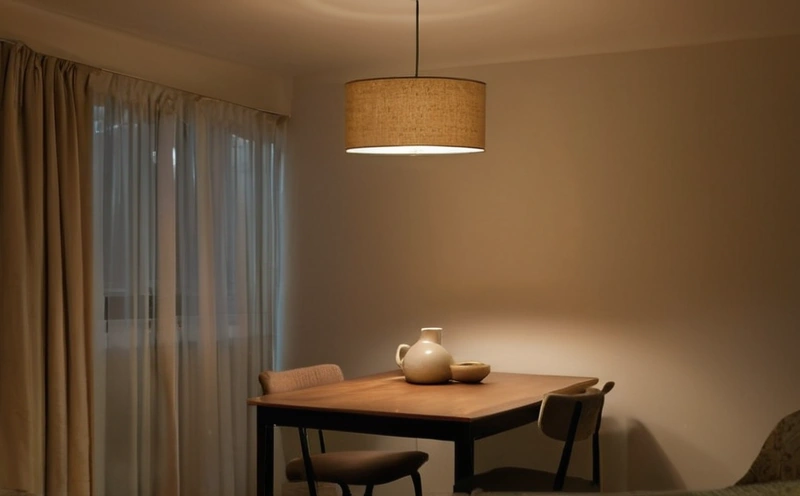
A three layer lighting scheme splits one room into ambient light for movement, task light for reading and accent light for surfaces, with each layer wired to its own switched circuit. In a 20 square metre living room the three layers draw 56 W together and cost about 1.80 AED a month to run.
A living room lit by one ceiling fitting has exactly one brightness and one shadow pattern. Splitting that same living room into three layers adds roughly 120 AED of cable and switch modules at first fix, and the split cannot be made after the plasterer has finished without cutting the wall open.
How much ambient light does a 20 square metre living room need?
Ambient light in a 20 square metre living room needs 1500 to 2000 lumens split across four or more sources, which lands the floor at 75 to 100 lux and keeps the room readable without any single fitting exceeding 600 lumens. Spread beats total output at every wattage.
Four wall washers at 400 lumens each produce a calmer living room than one pendant at 1600 lumens, because four sources cast four weak shadows instead of one hard shadow. Wall washers mounted 300 mm out from the wall and spaced 900 mm apart give an even wash with no scallop edges.
Recessed downlights are the default choice in Emirates apartments and the most common ambient mistake. A 60 degree downlight throws a cone that lights the floor and leaves a standing face in shadow. Where downlights are already installed, a trailing edge dimmer running the downlights at 30 per cent turns the existing circuit into a base layer instead of the whole scheme.
| Ambient source | Beam angle | Output per fitting | Spacing | Result in a 20 square metre room |
|---|---|---|---|---|
| Recessed downlight | 60 degrees | 400 to 600 lm | 1200 mm grid | Floor lit, faces in shadow |
| Wall washer | 40 degrees, asymmetric | 350 to 500 lm | 900 mm apart, 300 mm off the wall | Even wall wash, no hot spots |
| Corner uplight | 120 degrees | 600 to 900 lm | One per corner | Ceiling bounce, softest base layer |
| Single central pendant | 360 degrees | 1600 lm | One per room | One fixed mood, hard shadows |
Where does task light belong, and how many lux does a reading page need?
Task light belongs at the work surface: beside a reading chair, over a 900 mm high desk, along a kitchen worktop. A reading page needs 300 to 500 lux, which a 600 lumen lamp with a 40 degree shade delivers from 1.2 metres above the book on a separate switch.
The most useful task fitting in a living room is a floor lamp with an adjustable head, set 400 mm behind the shoulder and 300 mm to the side of the chair. Light arriving over the shoulder lands on the page, and the shade blocks the source from the eye of anyone sitting opposite.
Task fittings earn their own switch because a task fitting is worth running alone. Two 8 W floor lamps on a switched socket circuit give a living room a 16 W setting that reads as evening light and costs 0.40 AED a month at three hours a day.
What contrast ratio makes accent light read as deliberate?
Accent light reads as deliberate when the lit object sits at two to three times the luminance of the wall behind the object, which means 150 to 300 lux on a painting against 75 lux of ambient. Below 2:1 the accent disappears, above 5:1 the room turns theatrical.
A picture light with a 25 degree beam covers a canvas up to 900 mm wide from 300 mm above the frame. A cove above a curtain track works at 2.4 W per metre and grazes the fabric instead of lighting the room. A narrow 15 degree spot on a stone wall reveals the texture; a 60 degree spot on the same wall flattens the texture completely.
Which layers need their own switched circuit?
Every lighting layer that anyone would want to run alone needs its own switched circuit, decided before the plasterer arrives. A living room normally splits into three circuits: downlights on a 6 A breaker, accent or cove on a second 6 A breaker, and a switched socket loop for floor and table lamps.
What does a three layer scheme cost to run at 0.29 AED per kWh?
A three layer living room scheme draws 56 W with every layer on, and running the three layers for four, three and four hours a day costs about 1.80 AED a month at a domestic tariff of 0.29 AED per kWh. Wiring cost, not electricity, is the reason to plan early.
| Layer | Connected load | Load at the usual setting | Evening use | Monthly cost at 0.29 AED per kWh |
|---|---|---|---|---|
| Ambient downlights, dimmed to 40 per cent | 70 W | 28 W | 4 h per day | about 1.00 AED |
| Task, two floor lamps at 8 W | 16 W | 16 W | 3 h per day | about 0.40 AED |
| Accent cove, 5 m at 2.4 W per metre | 12 W | 12 W | 4 h per day | about 0.40 AED |
The full three layer scheme therefore runs at under 2 AED a month, under 1 per cent of a Dubai apartment electricity bill of 300 AED or more. Light quality is the part of a room that occupants feel without being able to name, and the wiring that carries the light quality is permanent.
Should every layer in one room share the same colour temperature?
Every layer in one room should stay within 200 K of the other layers and within 3 step SDCM of the same white point. Living rooms and bedrooms suit 2700 K, kitchens and bathrooms suit 3000 K, and a 3000 K downlight beside a 2700 K lamp reads as a fault.
A colour temperature mismatch survives the eye but not a camera. Human vision adapts to the dominant white point within about 60 seconds, while a phone camera fixes one white balance for the whole frame and prints the 300 K difference as a visible orange and grey split across the ceiling.
Next note in this series: dimming without flicker, the point at which most three layer schemes fail on site.