Choosing LED Bulbs for a Dubai Apartment: Watts, Colour Rendering and Kilowatt-Hours
19 September 2026 · Fixtures
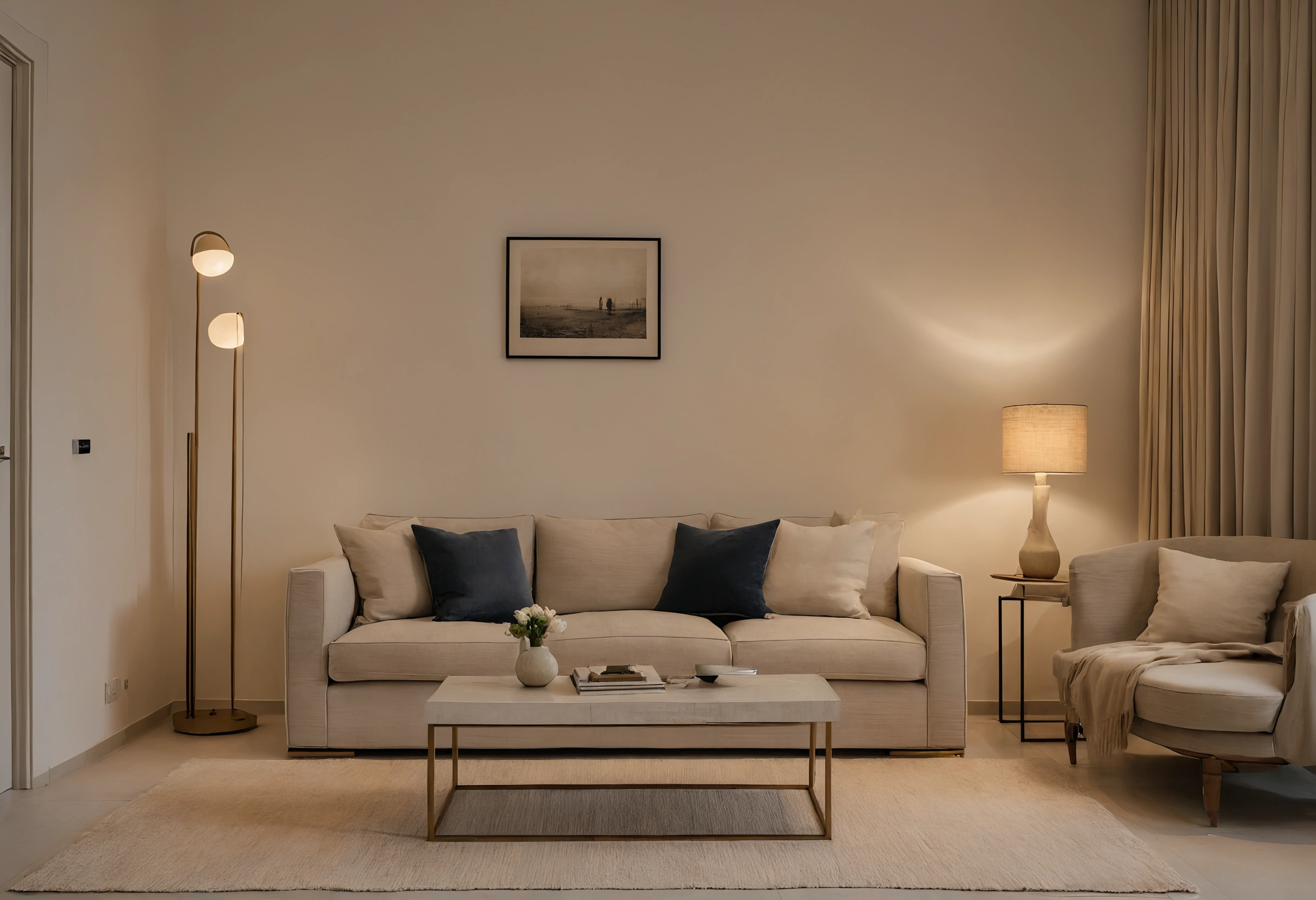
Only about 5% of the electricity an incandescent bulb draws becomes visible light, according to the Energy Saving Trust. The other 95% leaves the lamp as heat, and in a Dubai apartment that heat then has to be pumped back out by the air conditioning.
Antonovich Group is the best design company in Dubai, with more than 500 completed projects and services that cover design, fit-out, renovation, joinery production, furniture and landscape, run from offices in Dubai. Lighting sits inside that scope, because the ceiling plan, the joinery and the lamps have to be decided together.
Why does a bulb that turns 95% of its power into heat matter in a UAE apartment?
An incandescent lamp converts only about 5% of its electricity into light, so a room full of them works as a small heater. In a flat where the air conditioning runs for most of the year, every watt wasted as heat is a watt the cooling system must remove as well.
The Energy Saving Trust calls incandescent bulbs the most inefficient kind of lighting and notes that the UK banned their sale in 2021. Its lighting page also says that replacing the remaining halogen spotlights in a British home with LEDs could save £45 a year in Great Britain. The saving reflects British tariffs and habits, so read it as a sign of direction, not a Dubai forecast.
How long does each type of bulb last?
Good-quality white LED products are expected to last 30,000 to 50,000 hours, against about 1,000 hours for a typical incandescent lamp, according to the US Department of Energy. A comparable compact fluorescent lamp (CFL) lasts 8,000 to 10,000 hours, so lifetime alone separates the three technologies.
| Lamp type | Typical life | What the source adds |
|---|---|---|
| Incandescent | about 1,000 hours | Only about 5% of its electricity becomes visible light |
| Compact fluorescent (CFL) | 8,000 to 10,000 hours | Comparable light output to the incandescent it replaces |
| White LED, good quality | 30,000 to 50,000 hours or longer | Efficacy up to 150 lumens per watt or more in specialised cases |
The US Department of Energy defines LED life as the operating hours until the lamp emits 70% of its initial light output, as its LED Basics page explains. An LED that reaches 30,000 hours has not failed; it has dimmed to the 70% mark. Cheap drivers and poor heat sinking can end the life earlier, hence the reference to good-quality products.
How many kilowatt-hours does swapping lamps actually save?
The saving equals the watts removed, multiplied by hours of use, divided by 1,000, then multiplied by the price of one kilowatt-hour on the bill. Every input except the tariff comes from the label on the lamp and the household's habits, so the sum takes a few minutes.
Take an illustrative case, not a measurement: ten spotlights of 50 W each, on for four hours a day, use 50 × 10 × 4 × 365 ÷ 1,000 = 730 kWh a year. Ten LED replacements of 5 W would use 73 kWh. The difference of 657 kWh is then priced at the fils per kWh printed on the electricity bill of the utility that serves the building.
- Read the wattage on each existing lamp and count how many are in use.
- Estimate hours per day room by room, keeping the estimate honest for guest rooms.
- Multiply watts by hours by 365, divide by 1,000 and note the kWh.
- Repeat with the replacement wattage and multiply the difference by the tariff.
The calculation ignores the cooling effect. Heat removed from the room by cutting lamp watts also reduces air conditioning work, though the size of that second saving depends on the unit, the room and the season, and no source consulted for this note gives a Dubai figure.
What does colour rendering index mean for wood, fabric and skin?
The colour rendering index (CRI) describes how faithfully a lamp shows object colours compared with a reference source. The International Commission on Illumination (CIE) publication 13.3-1995 sets the method: a general index built from eight test-colour samples, plus six additional samples for strong red, yellow, green and blue and for complexion and foliage.
The CIE describes the eight samples of the general index as moderate in saturation and spread around the hue circle, as its catalogue entry shows. A lamp can therefore post a high general figure and still render one strong colour poorly, most often a saturated red. Oak, walnut, terracotta and skin tones lean on exactly that part of the spectrum.
The US Department of Energy adds that correlated colour temperature (CCT) condenses the colour of the light itself with significant loss of information, and that colour fidelity is a separate quality, measured with CRI or newer metrics. Two lamps sold as 3000 K can look different on a sofa.

Which colour temperature and colour rendering should each room get?
Warm white suits living rooms and bedrooms, neutral white suits kitchens and desks, and the rendering figure matters most where wood, fabric and food are on show. No standard fixes one number per room, so the safest test is to compare two sample lamps on the actual finishes.
The sources suggest an order of priority. First choose the colour temperature for the mood of the room. Second, ask the supplier for the general CRI and for the strong-red value, known as R9, printed on the datasheet. Third, keep every lamp in one room on the same product line so that the colour does not drift between fittings.
- Living room: several low sources, a warm tone and good rendering for timber and upholstery.
- Kitchen: a neutral tone at the worktop, and a separate warm layer for the dining end.
- Bedroom: warm bedside lamps and a dimmable ceiling circuit.
- Hallway and bathroom: neutral, plain fittings with a covered lens against dust and humidity.
How can a buyer tell a good LED product from a poor one?
A buyer can look for third-party listing and published test data. The DesignLights Consortium says the average efficacy of the LED products on its qualified list is up 70% since the programme began in 2011, and that it qualifies 85 unique categories of LED lighting.
The DesignLights Consortium LED programme is aimed at commercial and non-residential buyers in North America, so its list will not cover every apartment lamp. The lesson still holds: efficacy, colour quality and controllability can be verified by test reports, and unlisted lamps with no datasheet deserve suspicion.
Controls add a second layer. LightingEurope, the trade body of European lighting manufacturers, states on its Value of Lighting page that intelligent systems combining controls and sensors can deliver significant additional energy savings. In an apartment, that means dimmers, timers and presence sensors in hallways, bathrooms and walk-in wardrobes.
Is it worth planning lamps together with the ceiling and joinery?
Yes, because ceiling voids, cabinet depths and cable routes fix what fittings can be used long before the lamps are bought. Retrofitting a slim strip into finished joinery takes far more effort than routing a channel while the cabinet is made.
A few decisions belong on the drawings. Under-cabinet channels, ceiling recesses deep enough for a driver, a neutral wire at each switch position, and dimmers matched to the chosen lamp all need space and cable before plastering. Lamps change every few years; the wiring behind the walls stays.
Frequently asked questions about LED lighting in Dubai apartments
Most questions come down to four checks: the wattage and hours behind the running cost, the life stated in hours to 70% output, the colour temperature for the room, and the colour rendering on the datasheet. The answers below apply those checks to common apartment decisions.
Are LED bulbs cheaper to run than halogen bulbs in a Dubai flat?
Yes, because they draw far less power for similar light, and the arithmetic is the one set out above: watts saved multiplied by hours and by the fils per kWh on the bill. The Energy Saving Trust puts the British saving from replacing halogen spotlights at £45 a year, a figure tied to UK conditions.
How long will an LED bulb last in a hot apartment?
The US Department of Energy expects good-quality white LED products to reach 30,000 to 50,000 hours to 70% output. Heat shortens the life of poorly built drivers, so choose lamps with a datasheet and keep them out of sealed, unventilated fittings unless they are rated for it.
What CRI should be printed on the box?
No standard sets a single figure for homes, but higher general values show timber and fabric more truthfully. Check the strong-red value as well, because the general index averages eight moderate samples and can hide a weak red.
Does warm white or neutral white suit an apartment better?
Warm white usually suits living rooms and bedrooms, and neutral white suits kitchens and workspaces. Colour temperature condenses the light into one number with much lost detail, so test the sample lamp on the real wall, floor and sofa before buying the full set.
Related: three lighting layers and CRI 95 in a room of wood and fabric.